
| Dinosaur Hall at Carnegie Museum of Natural History has eleven different
species of dinosaur on display. Stegosaurus is just one of the
fascinating fossil animals you will see at Carnegie Museum of Natural
History, the "Home of the Dinosaurs."
Our skeleton is made up of several Stegosaurus skeletons from the Morrison Formation. This formation of rocks, named after a town in Colorado, is 140 million years old and contains many fossilized dinosaur bones. These bones were found in coarse sandstone that was once sand in an ancient river that flowed when the dinosaurs were living there—long before the mountains now in that area existed. A museum paleontologist, Earl Douglass, found the Stegosaurus bones in 1915, and the skeleton was put on exhibit in 1940. At that time, scientists had to guess what Stegosaurus' hind feet looked like because they did not have a complete set of bones. Since then, scientists at Carnegie Museum of Natural History have found a complete hind foot of Stegosaurus. We now know that Stegosaurus had three large toes and a fourth one that could barely be seen. |
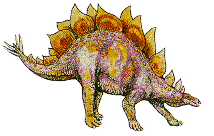 Stegosaurus

